
Chicago Industrial Vacancy: Below the National Average
Chicago is one of the nation's largest inland distribution bases, and industrial vacancy sits below the national average. Very few small industrial properties have been built in the past decade and replacement costs are prohibitively expensive, so developers have instead focused on large-scale construction. The bulk of new development is concentrated on buildings exceeding 200,000 square feet.
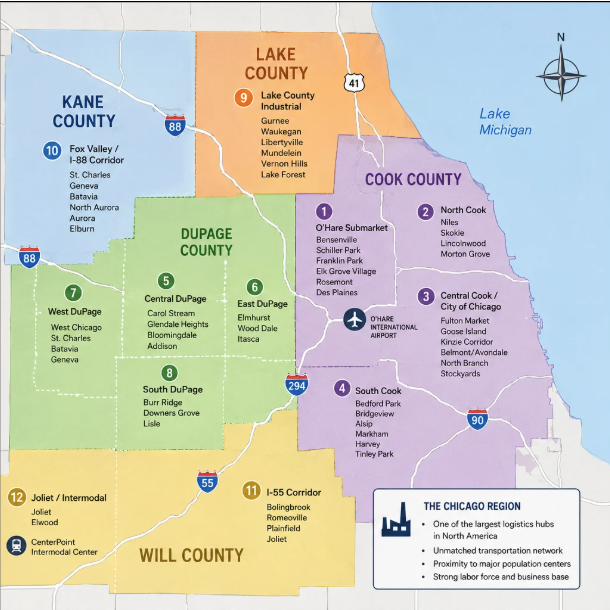
Submarket Shift: Dozens of such mega-warehouses over 200,000 square feet have been built across Chicagoland, and they are often not easy to fill. Vacancy for buildings above 100,000 square feet sits around 8%. For buildings under 100,000 square feet, vacancy holds steady at around 3%. Smaller buildings have seen far less new development, yet demand has only grown. National retailers and e-commerce companies are increasingly seeking smaller spaces for fulfillment and last-mile delivery, positioning inventory closer to customers to speed up delivery times.
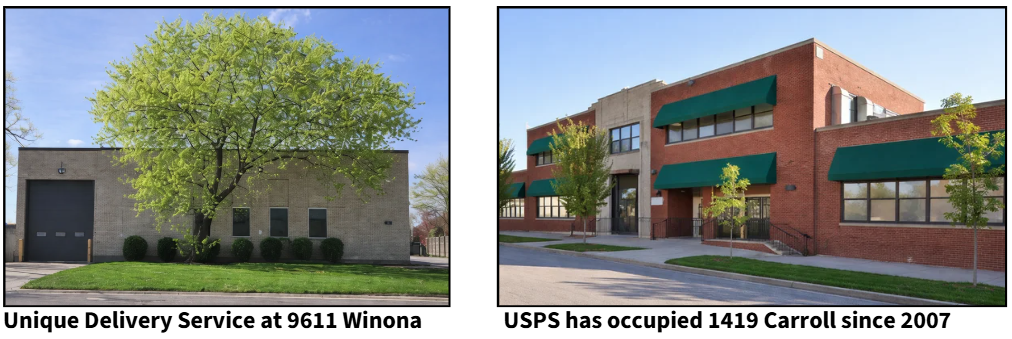
Last-Mile Logistics Within Our Portfolio: Unique Delivery Service, our tenant at 9611 Winona in Schiller Park, provides last-mile logistics for e-commerce and retail customers, including Nordstrom online orders and meal kit delivery services. Located just east of O'Hare, the property benefits from access to a dense population base and Chicago's transportation network, making it ideal for time-sensitive deliveries. At 1419 W. Carroll, USPS operates a critical distribution facility serving nearby Chicago zip codes. Together, these properties reflect a broader trend: strong and growing demand for well-located industrial real estate that supports last-mile distribution and essential logistics infrastructure.
Manufacturing Tailwind: Alongside last-mile demand, Chicago is seeing increased interest from manufacturers looking to move production closer to home and strengthen their supply chains. This represents another layer of tenant demand for the exact size buildings Brit owns, supporting occupancy, stability and rental growth over time. These trends support the case for our investment in smaller industrial buildings within the Chicagoland area.
Summary: Limited new supply, growing demand from last-mile logistics providers, and increasing manufacturing activity all point toward stronger occupancy and rising rents in the segment where our team has spent decades building its expertise.
